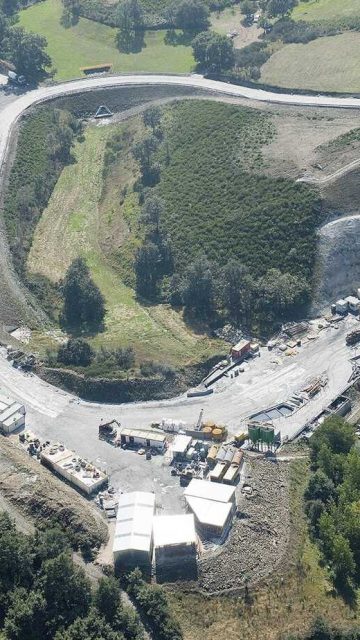
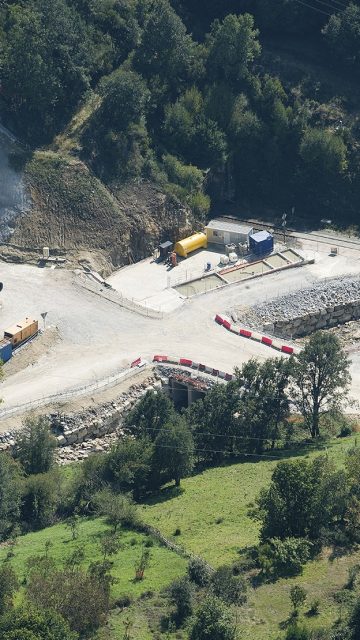
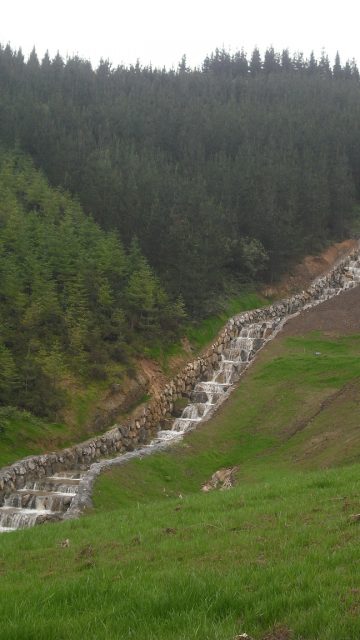
We are committed to reducing the environmental impact of our activities, maintaining a precautionary approach to environmental challenges reducing the overall carbon footprint of the company.
Ferrovial, the editor responsible for the website, uses technical and analytical cookies, its own and third parties, necessary for the correct website functioning, and cookies that allow us to analyze your navigation and offer you various functionalities within the website. For more information see our cookies policy.
This website uses first and third-party cookies, which are necessary for the website’s correct functioning, and which allow us to analyse your browsing and offer you several functionalities within the website. Out of these cookies, the cookies that are categorized as necessary are stored on your browser as they are essential for the working of basic functionalities of the website. We also use third-party cookies that help us analyze and understand how you use this website. These cookies will be stored in your browser only with your consent. You also have the option to opt-out of these cookies. But opting out of some of these cookies may have an effect on your browsing experience.
Necessary cookies are absolutely essential for the website to function properly. This category only includes cookies that ensures basic functionalities and security features of the website. These cookies do not store any personal information.
Cookie
Duration
Description
cookielawinfo-checkbox-advertisement
11 months 29 days 23 hours 59 minutes
The cookie is set by GDPR cookie consent to record the user consent for the cookies in the category ''Advertisement''.
cookielawinfo-checkbox-analytics
11 months 29 days 23 hours 59 minutes
This cookies is set by GDPR Cookie Consent WordPress Plugin. The cookie is used to remember the user consent for the cookies under the category ''Analytics''.
cookielawinfo-checkbox-language
11 months 29 days 23 hours 59 minutes
This cookies is set by GDPR Cookie Consent WordPress Plugin. The cookies will remember language preferences.
cookielawinfo-checkbox-necessary
12 months
This cookie is set by GDPR Cookie Consent plugin. The cookies is used to store the user consent for the cookies in the category "Necessary".
cookielawinfo-checkbox-non-necessary
11 months
This cookie is set by GDPR Cookie Consent plugin. The cookies is used to store the user consent for the cookies in the category "Non Necessary".
csrftoken
11 months
This cookie is associated with Django web development platform for python. Used to help protect the website against Cross-Site Request Forgery attacks
lang
This cookie is used to store the language preferences of a user to serve up content in that stored language the next time user visit the website.
PHPSESSID
This cookie is native to PHP applications. The cookie is used to store and identify a users' unique session ID for the purpose of managing user session on the website. The cookie is a session cookies and is deleted when all the browser windows are closed.
viewed_cookie_policy
11 months
The cookie is set by the GDPR Cookie Consent plugin and is used to store whether or not user has consented to the use of cookies. It does not store any personal data.
Track the pages visited and the interaction in them.
Cookie
Duration
Description
_csrf
Anti Cross-site request forgery cookie.
_ga
2 years
This cookie is installed by Google Analytics. The cookie is used to calculate visitor, session, campaign data and keep track of site usage for the site's analytics report. The cookies store information anonymously and assign a randomly generated number to identify unique visitors.
_gat
1 minute
This cookies is installed by Google Universal Analytics to throttle the request rate to limit the collection of data on high traffic sites.
_gat_gtag_UA_5784146_31
1 minute
Google Used to distinguish users.
_gat_UA-141180000-1
1 minute
This is a pattern type cookie set by Google Analytics, where the pattern element on the name contains the unique identity number of the account or website it relates to. It appears to be a variation of the _gat cookie which is used to limit the amount of data recorded by Google on high traffic volume websites.
_gat_UA-20934186-10
1 minute
This is a pattern type cookie set by Google Analytics, where the pattern element on the name contains the unique identity number of the account or website it relates to. It appears to be a variation of the _gat cookie which is used to limit the amount of data recorded by Google on high traffic volume websites.
_gat_UA-5826449-38
1 minute
Used by Google Analytics to throttle request rate
_gat_UA-58630905-1
1 minute
Used by Google Analytics to monitor the rate of requests
_gat_UA-70491628-1
1 minute
This is a pattern type cookie set by Google Analytics, where the pattern element on the name contains the unique identity number of the account or website it relates to. It appears to be a variation of the _gat cookie which is used to limit the amount of data recorded by Google on high traffic volume websites.
_gcl_au
2 months
Used by Google AdSense to experiment with advertising efficiency across websites using its services.
_gid
23 hours 59 minutes
This cookie is installed by Google Analytics. The cookie is used to store information of how visitors use a website and helps in creating an analytics report of how the website is doing. The data collected including the number visitors, the source where they have come from, and the pages visited in an anonymous form.
_hjAbsoluteSessionInProgress
30 minutes
This cookie is used to detect the first pageview session of a user. This is a True/False flag set by the cookie.
_hjCachedUserAttributes
Session
This cookie stores User Attributes which are sent through the Hotjar Identify API, whenever the user is not in the sample. These attributes will only be saved if the user interacts with a Hotjar Feedback tool.
_hjClosedSurveyInvites
365 days
Hotjar cookie that is set once a visitor interacts with an External Link Survey invitation modal. It is used to ensure that the same invite does not reappear if it has already been shown.
_hjDonePolls
365 days
Hotjar cookie that is set once a visitor completes a survey using the On-site Survey widget. It is used to ensure that the same survey does not reappear if it has already been filled in.
_hjid
365 days
Hotjar cookie that is set when the customer first lands on a page with the Hotjar script. It is used to persist the Hotjar User ID, unique to that site on the browser. This ensures that behavior in subsequent visits to the same site will be attributed to the same user ID.
_hjIncludedInPageviewSample
30 minutes
This cookie is set to let Hotjar know whether that visitor is included in the data sampling defined by your site's pageview limit.
_hjIncludedInSessionSample
30 minutes
This cookie is set to let Hotjar know whether that visitor is included in the data sampling defined by your site's daily session limit
_hjLocalStorageTest
Less than 100ms
This cookie is used to check if the Hotjar Tracking Script can use local storage. If it can, a value of 1 is set in this cookie. The data stored in_hjLocalStorageTest has no expiration time, but it is deleted almost immediately after it is created.
_hjMinimizedPolls
365 days
Hotjar cookie that is set once a visitor minimizes an On-site Survey widget. It is used to ensure that the widget stays minimized when the visitor navigates through your site.
_hjRecordingLastActivity
Session
This should be found in Session storage (as opposed to cookies). This gets updated when a visitor recording starts and when data is sent through the WebSocket (the visitor performs an action that Hotjar records).
_hjShownFeedbackMessage
365 days
Hotjar cookie that is set when a visitor minimizes or completes Incoming Feedback. This is done so that the Incoming Feedback will load as minimized immediately if the visitor navigates to another page where it is set to show.
_hjTLDTest
Session
When the Hotjar script executes we try to determine the most generic cookie path we should use, instead of the page hostname. This is done so that cookies can be shared across subdomains (where applicable). To determine this, we try to store the _hjTLDTest cookie for different URL substring alternatives until it fails. After this check, the cookie is removed.
_hjUserAttributesHash
Session
User Attributes sent through the Hotjar Identify API are cached for the duration of the session in order to know when an attribute has changed and needs to be updated.
_smvs
23 hours 59 minutes
Records visitor behavior data on the web. This is used for internal analysis and web optimization.
_uetsid
1 day
This is a cookie used by Microsoft Bing Ads and it is a tracking cookie. Allows you to interact with a user who has already visited our website.
_uetvid
2 weeks
Cookie installed by Google Tag Manager to store and track visits between sites.
apbct_visible_fields
Session
Prevents spam content
apbct_visible_fields_count
Session
ct_checkjs
Session
Stores dynamic variables from the browser
ct_fkp_timestamp
Session
Stores visit time
ct_pointer_data
Session
Stores dynamic variables from the browser
ct_ps_timestamp
Session
Stores visit time
ct_timezone
Session
Stores visit time
dtCookie
Session
GPS
30 minutes
This cookie is set by Youtube and registers a unique ID for tracking users based on their geographical location
lumesse_language
50 years ago
This cookie determines language of Application Process user interface (labels, interface etc.)
MR
1 week
This cookie is used to measure the use of the website for analytical purposes.
smclient
10 years
A cookie itself does not contain any information that enables to identify contacts and to recognize e.g. personal data of the website visitor. Connection to the contact card takes place in the SALESmanago system.
test_cookie
14 minutes
This cookie is set by doubleclick.net. The purpose of the cookie is to determine if the users' browser supports cookies.
This cookie is set by Facebook to deliver advertisement when they are on Facebook or a digital platform powered by Facebook advertising after visiting this website.
everest_g_v2
1 year
The cookie is set in eversttech.net domain. The purpose of the cookie is to assign clicks to other events on the customer's website.
fr
2 months 28 days 23 hours 59 minutes
The cookie is set by Facebook to show relevant advertisments to the users and measure and improve the advertisements. The cookie also tracks the behavior of the user across the web on sites that have Facebook pixel or Facebook social plugin.
IDE
2 years
Used by Google DoubleClick and stores information about how the user uses the website and any other advertisement before visiting the website. This is used to present users with ads that are relevant to them according to the user profile.
lms_ads
It is used to identify LinkedIn members from designated countries for advertising purposes.
mid
9 years
The cookie is set by Instagram. The cookie is used to distinguish users and to show relevant content, for better user experience and security.
MUID
1 year
Used by Microsoft as a unique identifier. The cookie is set using embedded Microsoft scripts. The purpose of this cookie is to synchronize the identifier in many different Microsoft domains to allow user tracking.
NID
6 months
This cookie is used to a profile based on user's interest and display personalized ads to the users.
personalization_id
2 years
This cookie is set by twitter.com. It is used to integrate the sharing features of this social network. It also stores information about how the user uses the website for tracking and targeting.
uid
1 year
This cookie is used to measure the number and behavior of website visitors anonymously. The data includes the number of visits, the average duration of the visit on the website, the pages visited, etc. in order to better understand user preferences for targeted ads.
VISITOR_INFO1_LIVE
5 months
This cookie is set by Youtube. Used to track the information of the embedded YouTube videos on a website.
YSC
Session
This cookies is set by Youtube and is used to track the views of embedded videos.