On Ancestral Roads
Dallas, United States
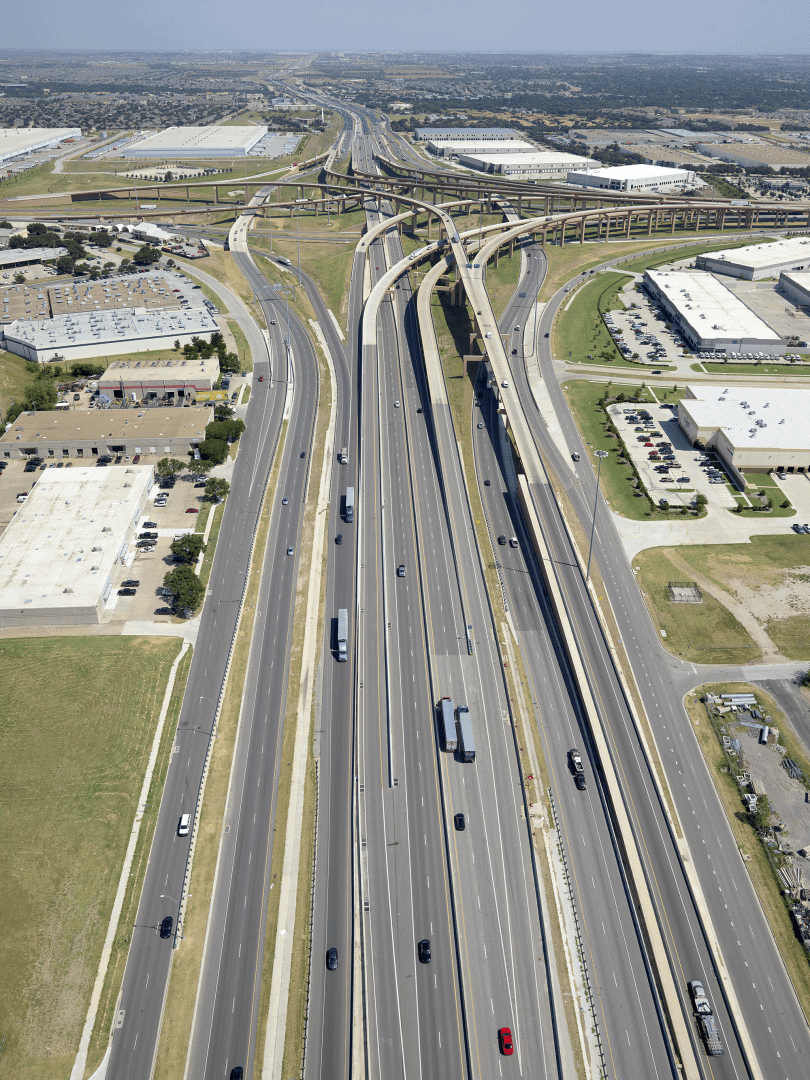
North Tarrant ExpressLike so many highways in the United States, the North Tarrant Express follows much older paths. It emerged from reconstructing Interstate 820, thus partially replacing US 80 and the Dixie Overland Highway. The latter was one of the first motor vehicle routes in the United States and the first to link the Atlantic and Pacific shores by asphalt. The North Tarrant Express also tells a story of engineering and how things have changed in just one century.
The highway was designed to improve mobility and relieve traffic in one of the country’s busiest areas. It crosses 84 bridges, 140 kilometers of prestressed concrete beams, 15,000 tons of reinforcements, and 800 million kilos of asphalt. Building it required moving six million cubic meters of soil and installing just under 60 miles of pipes and sewers.
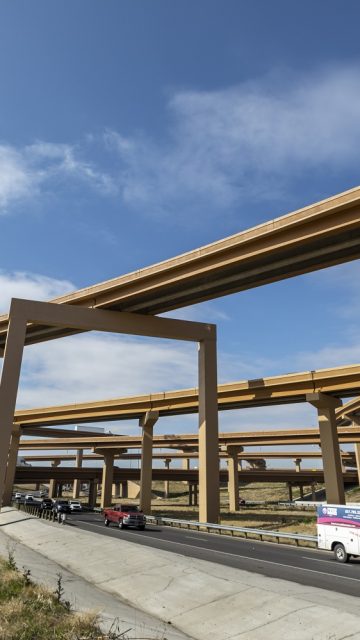
Seen in the temporary peacefulness of night from under one of its many viaducts, with the concrete stretching out forever, the highway seems to stir memories of roads past, with a small fort on the river banks. But this scene fades shortly before dawn as one of the country’s fastest-growing regions wakes up and gets behind the wheel.



Texas, US
-
9.5
miles
-
$1.5B
construction value
-
2022-2027
project date
Scope of Work
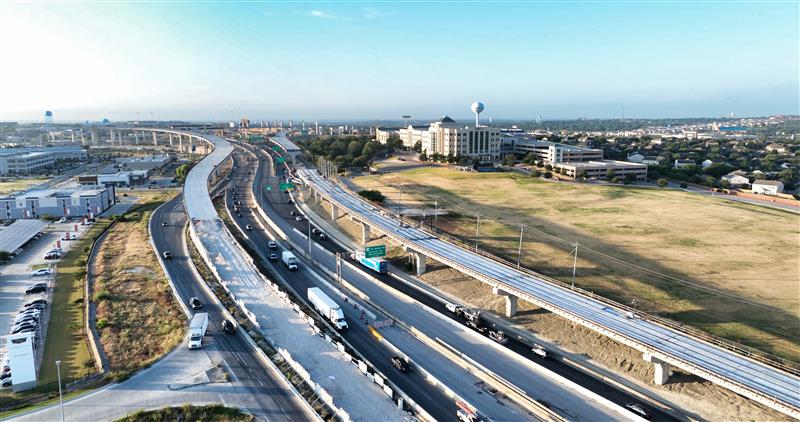
The Ferrovial team, Alamo NEX Construction, was selected by the Texas Department of Transportation (TxDOT) as the contractor for the I-35 NEX Central project located in San Antonio. The project consists of the design, construction, and maintenance of 22 miles of improvements along I-35. Once complete, the project will improve safety and mobility on one of the busiest highways in North America.
Project Summary
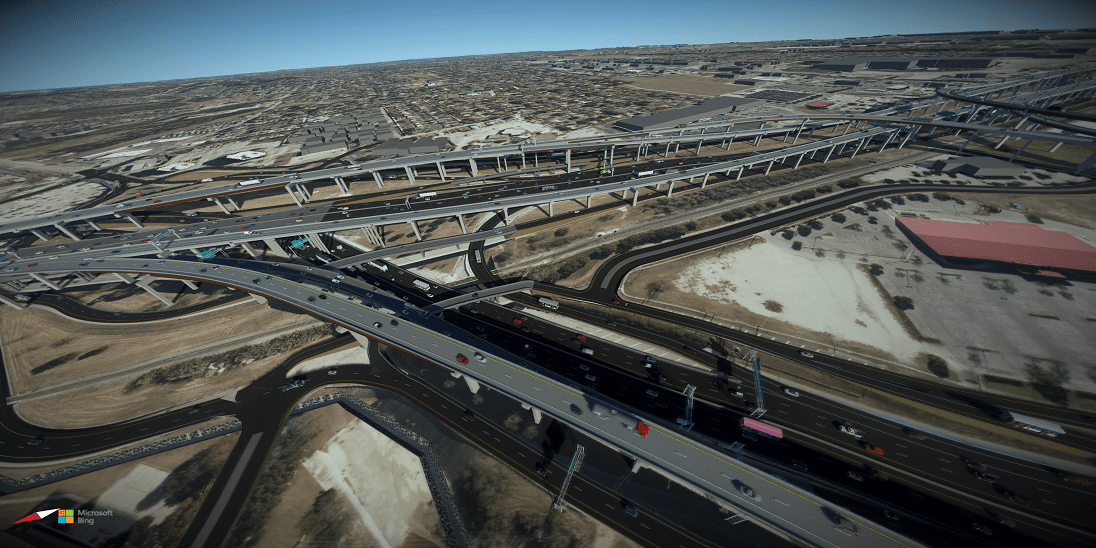
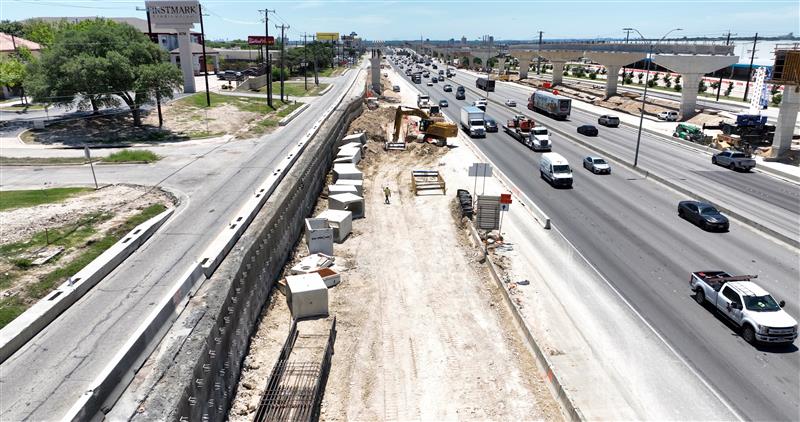
The project consists of the design, construction, and maintenance of approximately 22 miles of non-tolled improvements along I-35, including a portion of I-410 North and Loop 1604. The project scope includes 22 miles of elevated structures, eight direct connectors in two major interchanges, and the reconstruction of more than 5.5 miles of mainlanes and frontage roads. The project also includes other improvements, such as at-grade widenings of the existing roadway, full project overlay, drainage infrastructure improvements, and replacing or modifying existing structures, including retaining walls and cross streets.
Unique Project Aspects
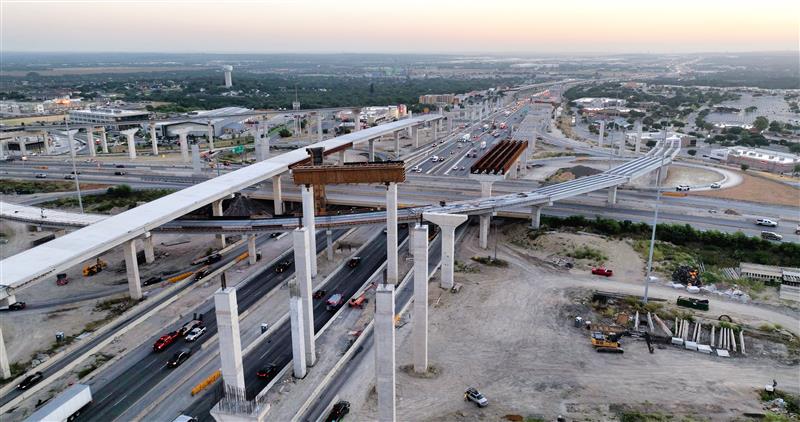
The I-35 NEX Central Project is situated in a densely populated urban area characterized by high traffic volumes and a very limited right-of-way (ROW). The project faces unique challenges, including the construction of elevated lanes in this confined space, the relocation of numerous existing utilities, and the need to maintain TxDOT’s roadway intelligent transportation systems (ITS) while minimizing disruptions for the traveling public on an interstate highway. The delivery of over 800 bridge spans, which includes more than 4,700 concrete beams, 1,300 columns, and six million square feet of bridge decks, presents a significant challenge, particularly as it is located over one of the busiest highways in North America.
Community Benefits
It is estimated that when the Central project is complete, travel time on the existing mainlanes between the Bexar County line and Loop 410 North will be cut in half from about 20 minutes to less than 10 minutes.
Key Figures
I-35 Northeast Expansion (NEX) Central Project-
Client
Texas Department of Transportation (TxDOT)
-
Location
San Antonio, TX
-
Completion date
Late 2027
-
Project size
Approximately 22 miles
-
Contract value
$1.5 Billion
Related Projects
See more projects
I-66 Outside the Beltway, VA

I-77 Express Lanes, NC
North Tarrant Express, TX

407 ETR

Loop 12 Reconstruction
Irving, TX
-
Length
9.6Miles -
Contract Value
$309Million -
Major Highways
4 -
New Bridges
32
Scope of Work and Project Summary
The Loop 12 project consisted of the reconstruction of State Loop 12, along with the renovation of existing interchanges between four major highways – State Loop 12, State Spur 482, State Highway 114 and 183.
The contract included renovation of the interchange and existing toll gantry, construction of 32 new bridges, walls and concrete pavement, widening of existing main lanes, and frontage roads.
The project included eleven post-tensioned straddle bent caps, and from a design standpoint, this type of bent caps helps minimize span lengths on the bridges, therefore allowing the use of concrete girders which helps to speed up the project in comparison with the use of steel girders.
Traffic congestion was very high, with capacity beyond the old cloverleaf ramps, so the new design successfully addressed this issue and provided relief of congestion in one of the busiest areas of the DFW.

Key Figures
Loop 12 Reconstruction-
Client
Texas Department of Transportation
-
Location
Irving, Texas
-
Completion date
April 2024
-
Project Size
9.6 miles
-
Contract Value
$309 million
Our Projects around the World
Discover more projects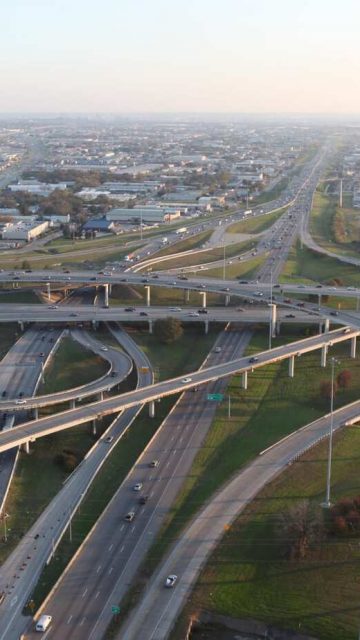
LBJ Express, TX
I-77 Express Lanes, NC

Renovation of the “Frontón Beti…
North Tarrant Express, TX
I-66 Outside the Beltway, VA
407 ETR
IH 35 Rehabilitation
Waco, TX
-
Length
6.7Miles -
Contract Value
$341Million -
Bridges
24
The project involves reconstruction of 6.7 miles of IH 35 in Waco, TX. The project was bid at $341 million and is the largest hard bid project to be awarded in Webber’s history.
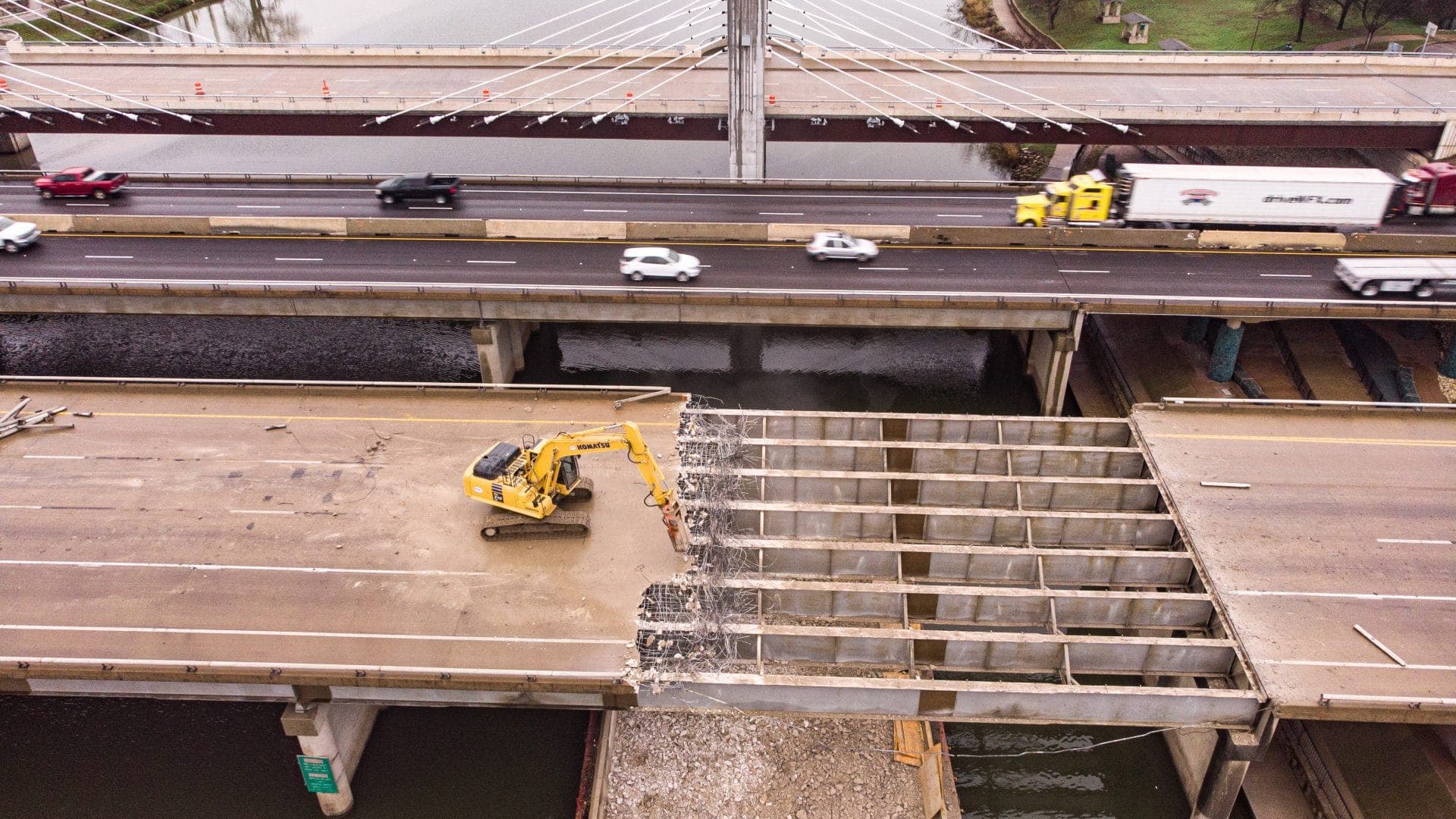
The project scope of the rehabilitation of IH 35 consists of widening and reconstruction of 6.7 miles from Craven Road to 12th Street in Waco, Texas. The contract includes construction of 24 bridges, the removal of three existing concrete main lanes in both directions, replacement with four lanes of 15” continuously reinforced concrete pavement – north and southbound – and reconstruction of the existing concrete frontage roads.
In addition, the project includes the installation of more than 132,000 linear feet of reinforced concrete box culverts and pipe, electrical, concrete flatwork, landscape, irrigation and pavement markings throughout the corridor.
Special Features
One of the challenges that the project team faces is the work over the Brazos River and the need of using barges and bulkheads (sheet-pile and compacted earth setup to form a work dock) as a mean to provide stable work surface, for both man and equipment. A special Safety plan was needed for these water operations, first to address the safety of the employees, but also the impact that construction in this area has for the environment and recreation on the river.
For example, all barges must be engineered to ensure that the requirements of stability are satisfied, taking into consideration the type of equipment operated on the barges and their working radius. Cranes are most affected by this as their swing radius and the weight of their loads are much greater than any other equipment used on the barges. As a crane swings its load, it will apply forces to the barge in variable areas that may cause the barge to dip down in the water. This dipping is referred to as “List” (dipping to the lateral sides) and “Trim” (dipping to the frontside). Webber monitors the List and Trim with a “List & Trim Monitor” that is mounted in the cabin of the crane with sensors attached to the body of the crane. This monitor helps the team keep within the maximum allowable tolerances of List and Trim that are outlined by Crane Manufacturers, OSHA and ASME.
Another significant challenge is that the project is located near the Baylor University campus. Due to the heavy traffic flow and adjacent retail and residential along right-of-way, the project is working during restricted hours and lane closures to minimize the impact to the traveling public and local businesses.
Due to the size of the project, over 25 crews and various subcontractors work at the same time in the different areas. Also, 25 engineers and 4 superintendents supervise and coordinate the job.
The schedule, the pace, the amount of people and the size of the job make this project truly a challenge. But we are working hard as a team, making sure we are all helping each other achieve our milestones, our finish dates. Everyone is cooperating with the client, with the subcontractors, and with other crews.
Paloma Fernandez, Senior Project Manager.
Photo Gallery
SH 146 Expansion
Houston, TX
-
Length
4.36Miles -
Contract Value
$202Million -
Bypass Bridge Spans
116ft
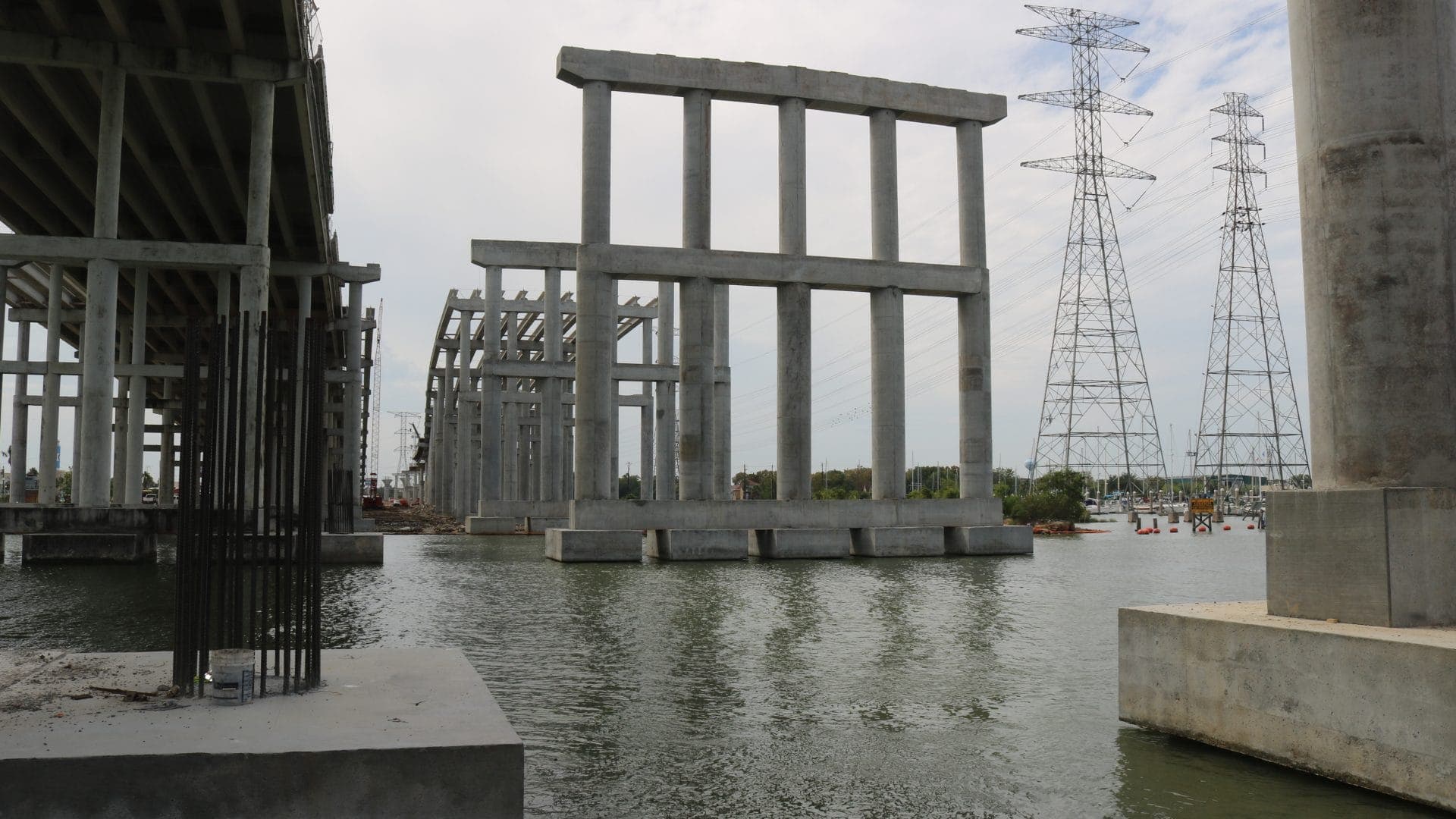
Webber SH 146 Expansion Project scope is to widen 4.36 miles of roadway, as well as construct a 116-span bypass bridge in Seabrook/Kemah (SE Houston). This highly anticipated local project was bid at $201.8 million with a contract time of 60 months.
SH 146 prior to project startup was a multilane, paved highway with a center turn lane along the project route. The expansion project scope is widening this highway to a traditional freeway system, with six main lanes and two-lane frontage roads. This project extends from Red Bluff road to north of SH 96, approximating at 4.36 miles.
To further alleviate traffic, a 12,628-foot long bridge must be constructed across Clear Lake. This 116-span Express bridge between Seabrook and Kemah will allow three lanes of traffic to travel in both northbound and southbound directions, easing congestion for local traffic. In addition to building the new bypass bridge, the project expands the existing 40-span bridge from two lanes to three lanes in either direction for local travelers, along with a bikeway.
The contract includes 700+ drill shaft foundations -65% of which have been completed already-, 13 retaining walls with aesthetic details for the City of Seabrook and City of Kemah, and different substructure elements, such flared columns and inverted T-caps.
There are three bents that must be constructed in the Clear Creek Channel for both the arterial widening of the existing bridge and the construction of the new Express bridge. The boundaries of the work area are the bay to the east of the bridge and Clear Lake on the west. An interesting challenge for the project team is that Clear Creek sees over 1,000 boat transits per day during the boating season. The Clear Creek Channel that passes through the work area is the only travel way connecting the bay and the local marinas, which are the second busiest in the United States. In order to partner with the USCG, TxDOT, and local boating communities, Webber implemented a traffic management system utilizing traffic signals on barges, flaggers on boats, and buoys to ensure safe passage of boats travelling through the channel during construction.
This specific traffic control plan and the priority given to value engineering have allowed the project team to maximize traffic flow while minimizing economic impact on local businesses and the traveling public.
Being one of Houston’s designated hurricane evacuation corridor for thousands of residents, this project had been long anticipated by local officials and the community and is scheduled to be completed in early 2023.
Click here to see the latest developments of the expansion project in the areas of Seabrook and Kemah.
Photo Gallery
SH 99 Grand Parkway
Houston, TX
-
Lenght
52.5Miles -
Investment
$938million -
2018-2022
project date
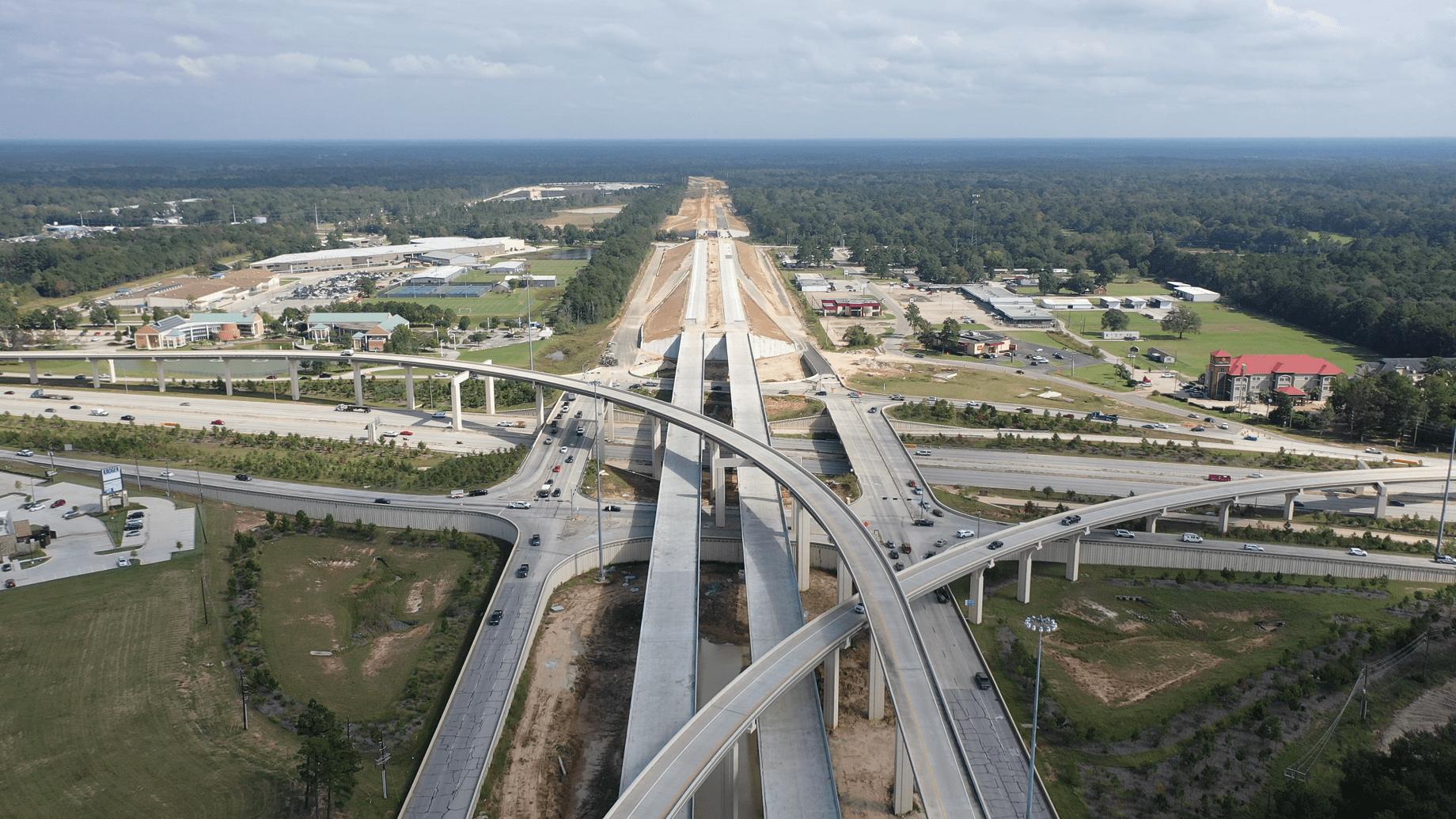
The SH 99 Grand Parkway Segments H, I-1 & I-2 project is the continuation of the construction of a 184-mile highway loop around the Greater Houston area. The Segments H, I-1 & I-2 represent a 52.5-mile corridor spanning Chambers, Harris, Liberty and Montgomery counties northeast of Houston.
The scope of the project, at a total cost of $1.28 billion, included construction of new lanes and modernization of the existing tolling infrastructure. The construction contract value with GPI is $938M and that is with change orders.
Project Scope
- A new tolled two-lane controlled access facility, with intermittent four-lane sections for passing from US 59 North to IH 10 East
- Four additional toll lanes from IH 10 East to FM 1405
- Reconstruction of 74 bridges
- Upgrades the visual appearance of the corridor through aesthetic enhancements and landscaping improvements
The Grand Parkway is divided into 11 segments in all (A though I-2). The highway connects State Highway 146 in Galveston County to State Highway 146 in Baytown and crosses seven counties. The SH 99 Grand Parkway Segments H, I-1 & I-2 project is owned and managed by the Texas Department of Transportation. Construction is being performed by Grand Parkway Infrastructure, a consortium of Ferrovial Construction, Granite Inc., and Webber, LLC.
The project is designed to:
- Improve the connectivity within the existing transportation network by providing a circumferential link between two major highways, Interstate Highway 10 and Interstate Highway 69.
- Reduce congestion on area roadways while providing more travels options for the motorists.
- Provide an alternate evacuation route to help relieve congestion during emergency evacuations.
- Accommodate the forecasted population growth.
- Better facilitate the movement of the people and goods to businesses, places of employment, and residential areas within the region.
Other improvements on Segments H & I include
- Segments H and I-1 provide 37.5-miles of two-lane toll road, with intermittent four lane sections for passing, from I-69/US 59 North in Montgomery County to I-10 in Chambers County
- Segment I-2A upgrades tolling equipment along an existing 8.7-mile, four-lane section, which opened in 2008 and became part of the Grand Parkway in June 2017, from I-10 to FM 1405
- Segment I-2B adds 6.1-miles of four-lane toll road from FM 1405 in Chambers County to SH 146 in Harris County
Photo Gallery
Related Projects
See more projects
I-66 Outside the Beltway, VA
I-77 Express Lanes, NC
North Tarrant Express, TX
407 ETR
Traveling Through History to the Future
Dallas , United States
LBJ Expressway, TXThe Lyndon B. Johnson Expressway, known to Texans as the LBJ, is a maze of asphalt and concrete.
This galaxy of lanes and junctions intersecting at different heights, lines straight and curved, parallel and intersecting, make up one of the major traffic systems on the planet. The LBJ Express has twice the capacity of the old LBJ highway, and it is ready for Dallas’s traffic needs.
The highway crosses 90 bridges and has interchanges standing three levels high. Some 60 miles of piling and 200 of precast beams were used in its construction.


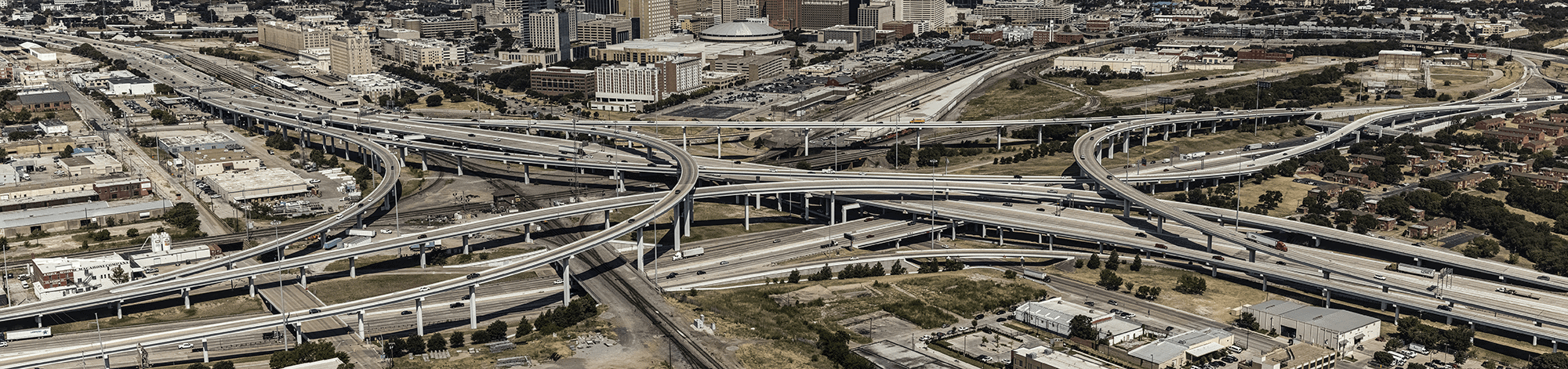

90 bridges, 62 miles of piles and 330 prefabricated beams.
The 250,000 vehicles on it every day travel on the almost 600,000 tons of pavement that make up this road, which has nine lanes each way. These nine lanes split into up to 28 lanes in some places.
This historic infrastructure will keep running well into the future.
