
Gijón, España
-
2026
Completion Date
-
1,200kW
Thermal Capacity
-
591K€
Budget spent
Project Overview
DITECPESA’s terminal in Gijón receives, stores and distributes asphalt bitumen. Because bitumen must remain fluid for storage and handling, the tanks require a continuous supply of heat through a thermal-oil circuit. Before the project, this thermal energy was generated by two gas-oil boilers.
Ferrovial Energy and DITECPESA developed a biomass installation to introduce renewable process heat into this existing industrial system without compromising operational continuity, temperature control or reliability.
The initiative began at the end of 2025 and was presented as an industrial decarbonisation project by Ferrovial Energy and DITECPESA at the Port of Gijón.
Project Scope
-
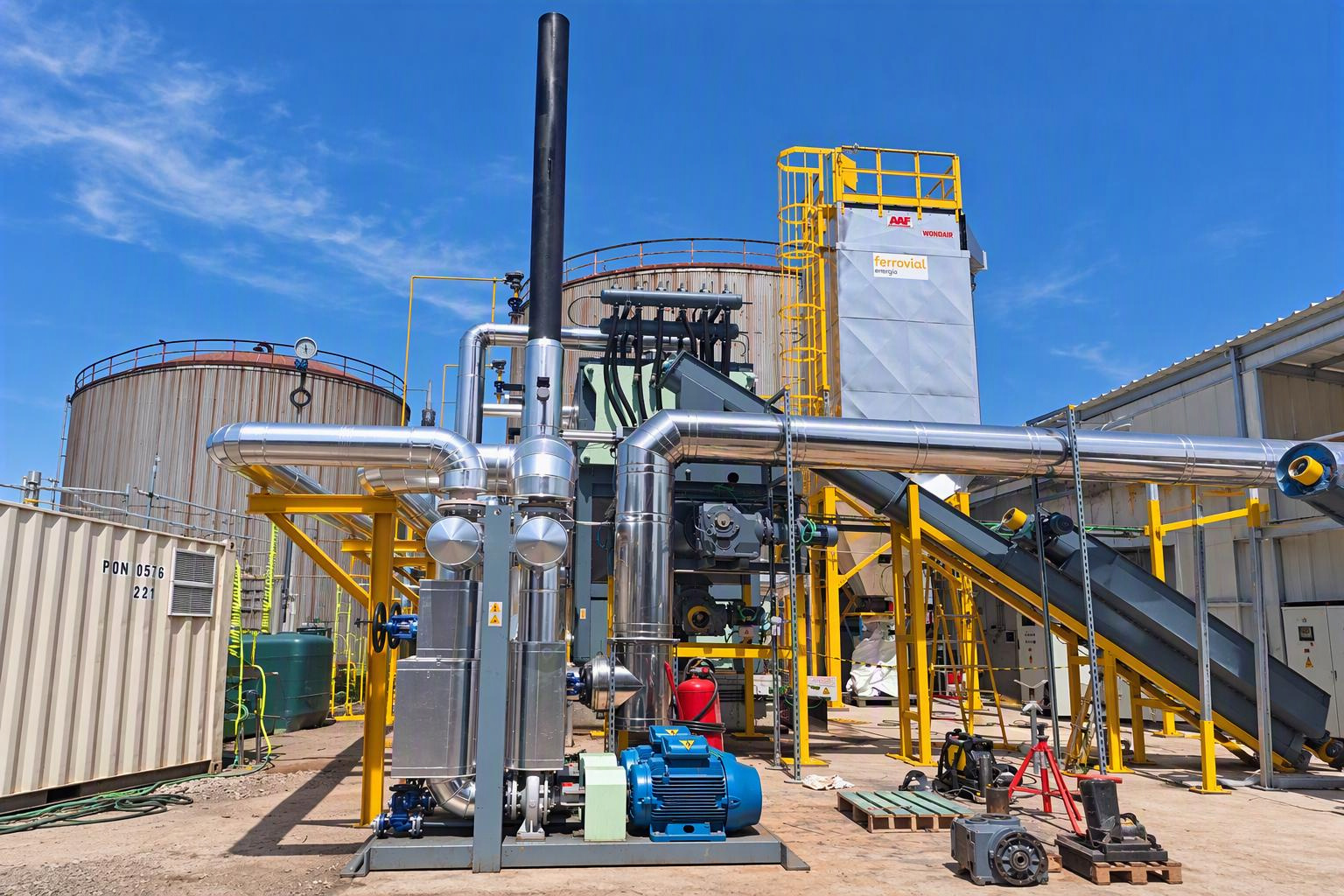
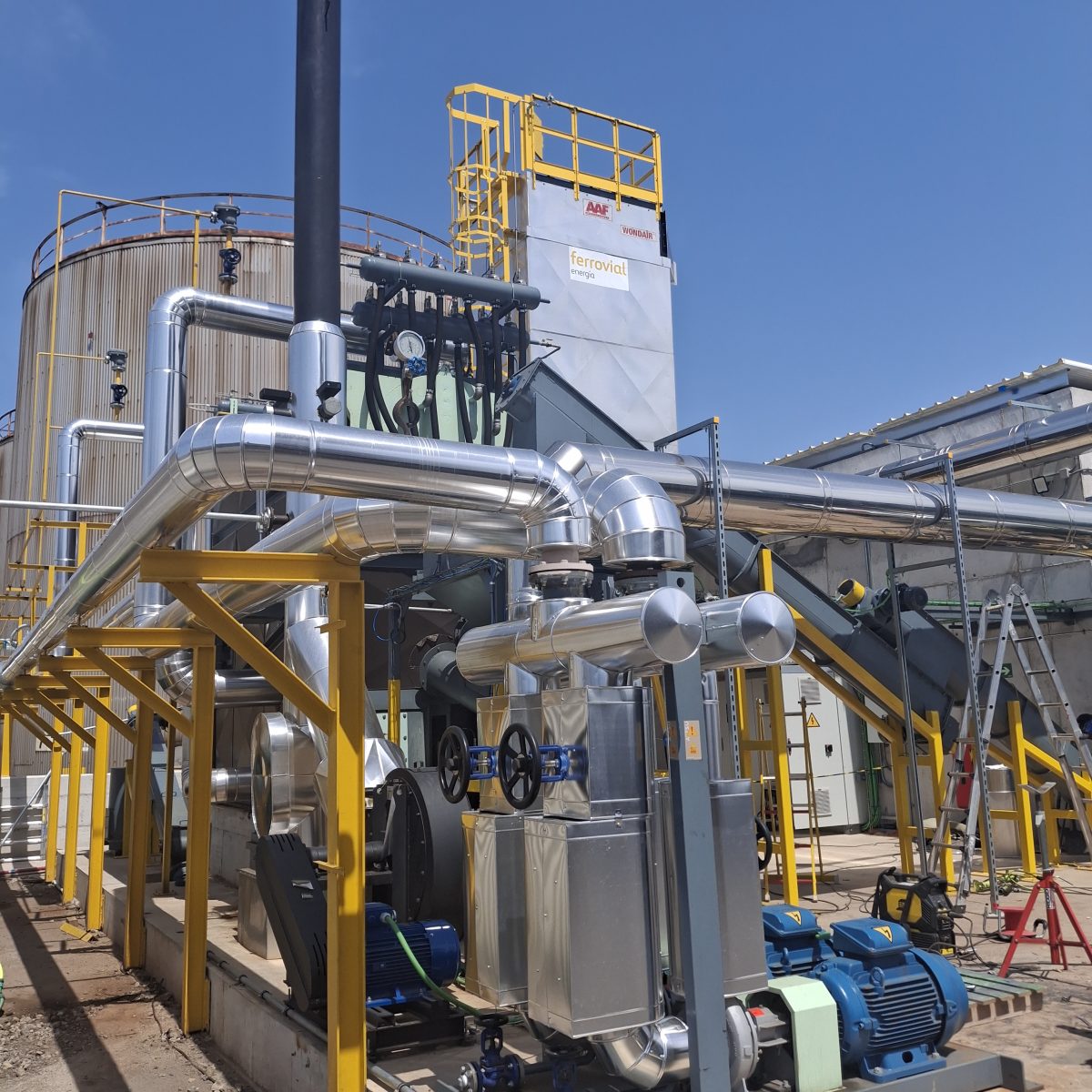
1,200 kW biomass boiler for the thermal-oil circuit used to keep bitumen fluid.
-
Wood-chip storage and automatic biomass feeding, with auxiliary and heat-recovery systems.
-
Integration into the existing industrial thermal system and retention of back-up generation.
-
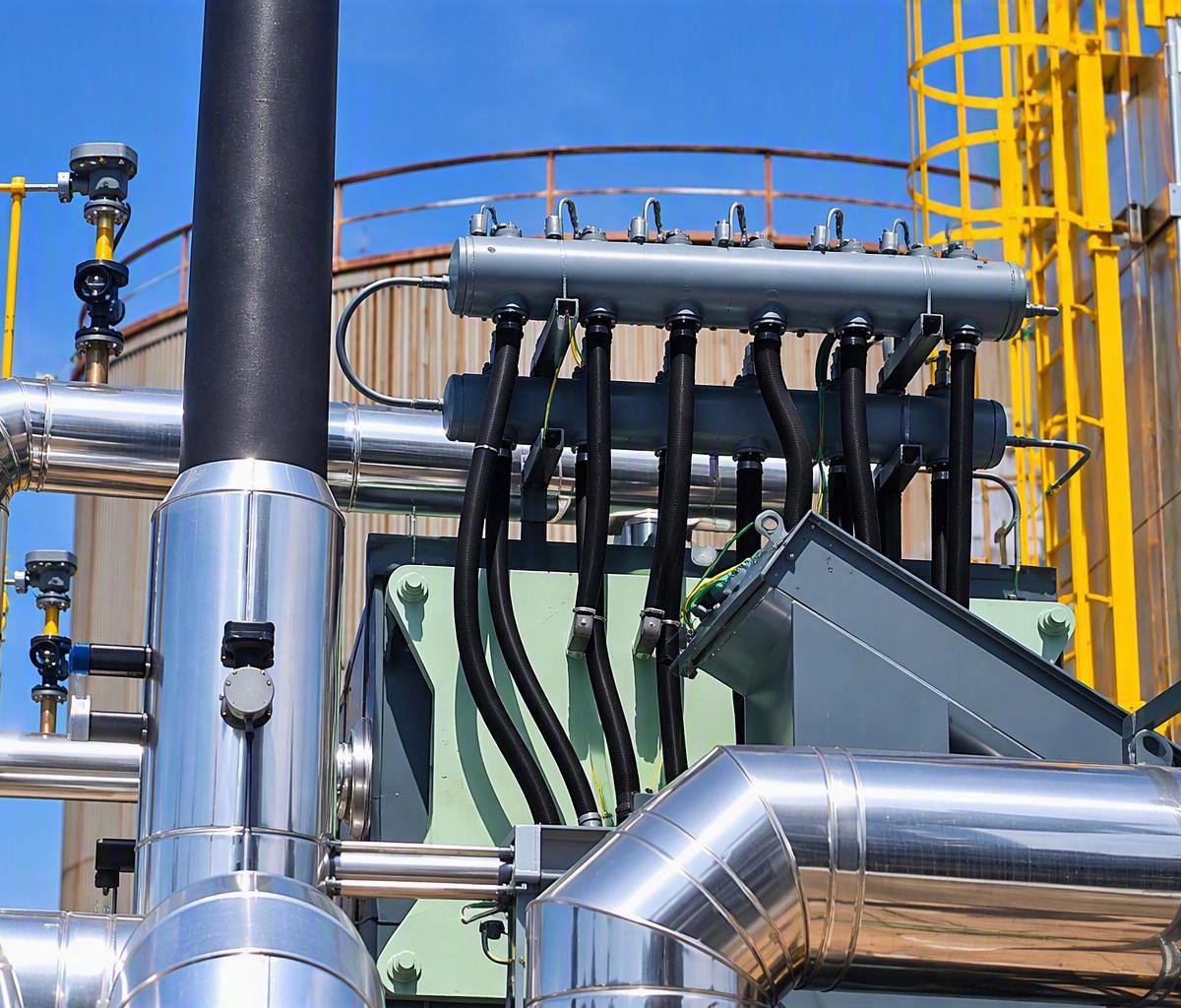
Flue-gas treatment including a bag-filter system, instrumentation, temperature control, bypass logic and compressed-air cleaning.
-
Thermal-energy measurement system whose final methodology and validation are addressed in the provisional acceptance documentation.
-
Digital collection of operational and energy data to monitor performance, optimise the plant and support sustainability evidence.
-
Experimental CO₂-capture line connected to biomass combustion gases, developed with CARTIF through absorption, membrane contactors
The Industrial Decarbonisation Challenge
Maintaining a reliable heat supply is essential to the terminal’s operation because bitumen storage and handling depend on maintaining the required temperature.
The challenge was therefore broader than replacing a conventional boiler. The project had to integrate renewable thermal energy into an operating industrial asset while addressing biomass supply, thermal-oil integration, emissions treatment, instrumentation, control and continuity of service.
An Integrated Approach to Renewable Heat and Carbon Management
The innovation is the integration of energy, carbon management and traceable data in a live industrial terminal.
The carbon-capture work must be described accurately as an experimental R&D pilot, not as a permanently operating capture plant. Tests were carried out on real biomass flue gas. A test communicated on 16 June 2026 measured CO₂ concentration of 16.1% at the inlet and 3.6% at the outlet under that test condition.
The broader value is transferability: the work combines Ferrovial Energy’s industrial energy capability, DITECPESA’s operational environment and CARTIF’s carbon-capture research, generating knowledge that can inform other heat-intensive industrial assets.
Community Impact
- Reduced dependence on fossil fuels for process heat at an operating port terminal.
- Lower environmental footprint targeted for bitumen storage and handling operations.
- Industrial demonstration of renewable heat without relocating the productive activity.
- Practical experience in biomass logistics, thermal-oil integration, filtration, controls and maintenance.
- Applied R&D on recovering biogenic CO₂ from real flue gas.
- Digital data collection aimed at improving transparency, optimisation and sustainability evidence.
- Institutional visibility: the project was presented to representatives of the Port of Gijón and communication material was coordinated with the Port.
Outcomes and Results
The biomass installation has been operational and supplying thermal energy since 8 July 2026.
Project documentation estimates that the system could avoid approximately 780 tonnes of CO₂ per year. This figure remains an estimate pending external validation and should therefore not be presented as a certified achieved reduction.
The experimental carbon-capture programme has also produced results using real biomass flue gas. In the test reported on 16 June 2026, CO₂ concentration was measured at 16.1% at the inlet and 3.6% at the outlet under the specific test conditions.
The pilot therefore provides an R&D pathway for capturing part of the biogenic CO₂ generated through biomass combustion. Continuous carbon-negative operation remains subject to validation and further development.
Talk us about industrial decarbonisation
Explore how renewable process heat, operational data and applied carbon-capture R&D can support decarbonisation of heat-intensive industrial assets.
Our Projects around the World
Discover more projects
Ontario Line South
Caixa Forum Madrid

TEXpress Lanes
Montabliz Viaduct